

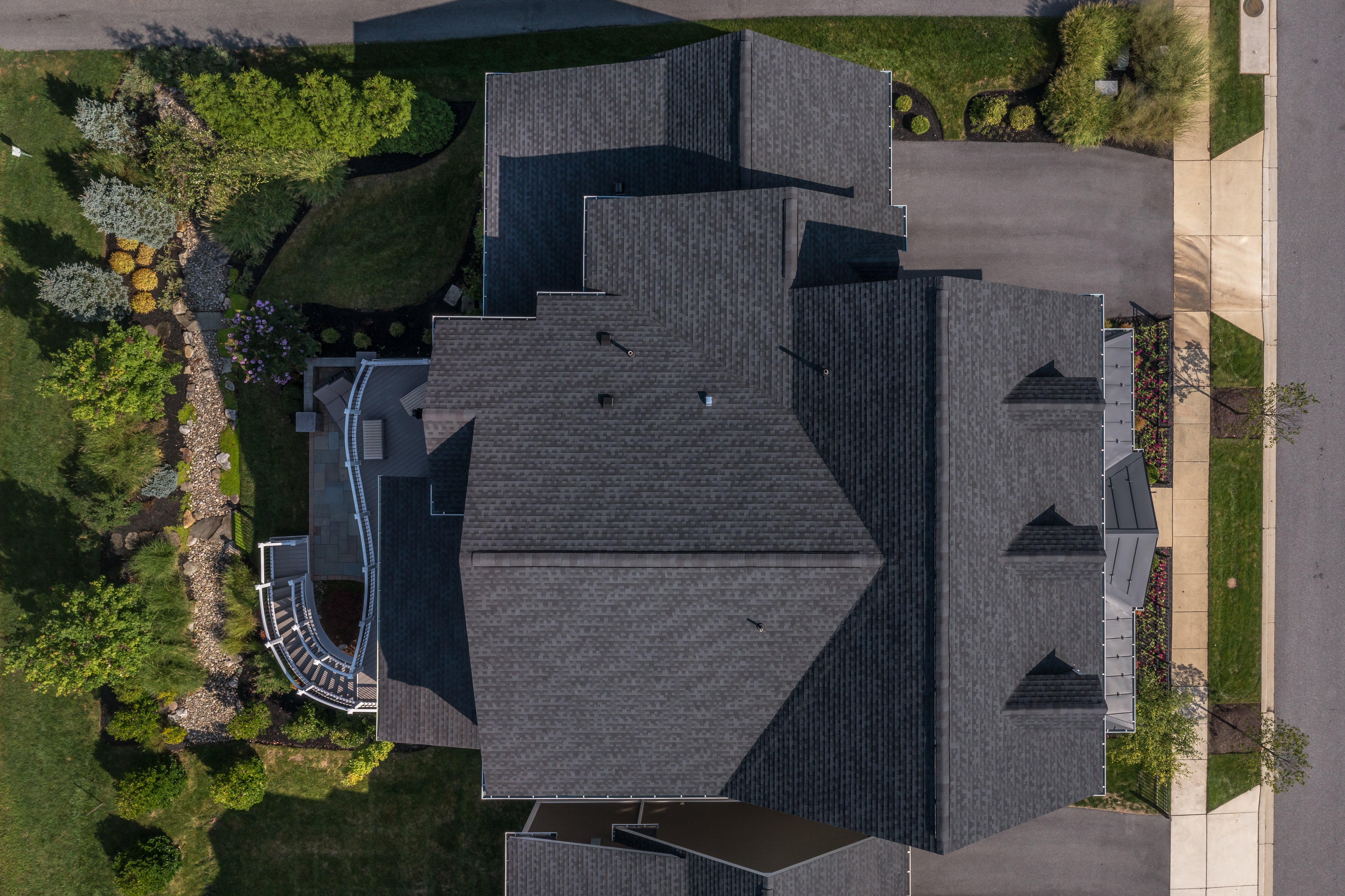
Here's an uncomfortable truth about estimating: you can know every line item, run a flawless macro library, and negotiate like a lawyer — and none of it matters if the measurements underneath are wrong. Squares drive the shingle order. Pitch drives the labor. Eave and rake lengths drive the drip edge, starter, and gutter apron. Get the measurements wrong by 10% and every downstream number inherits the error.
So the question of how to measure a roof — by hand, or by aerial report — isn't a preferences debate. It's a decision about accuracy, time, safety, and what a claim reviewer will accept. Here's the honest comparison, plus the manual skills you should keep sharp even in the aerial era.
The Manual Methods (Still Worth Knowing)
On-roof measurement
The traditional way: get up there with a tape, measure each plane's length and width, sketch as you go, sum the areas. On a walkable roof with simple geometry, a careful on-roof measure is as accurate as anything money can buy — you're measuring the actual roof, not a model of it.
The costs are equally real: time (an hour-plus on a cut-up roof), safety exposure on anything steep or high, and error accumulation on complex geometry — every hip, valley, and offset is another chance to mis-measure or mis-record. And some roofs simply shouldn't be walked: heavy moss, brittle aged shingles, wet metal, 10/12 pitches without staging.
Ground-based measurement (with the pitch multiplier)
The smarter manual method for many roofs: measure the building's footprint and overhangs from the ground, then convert flat area to sloped area using the pitch multiplier.
The math is clean geometry. Measure the footprint area the roof covers (including overhangs), determine the pitch (from the gable end, from inside the attic with a level and tape, or with a pitch gauge on the rake), and multiply:
| Pitch | Multiplier | Pitch | Multiplier |
|---|---|---|---|
| 3/12 | 1.031 | 8/12 | 1.202 |
| 4/12 | 1.054 | 9/12 | 1.250 |
| 5/12 | 1.083 | 10/12 | 1.302 |
| 6/12 | 1.118 | 11/12 | 1.357 |
| 7/12 | 1.158 | 12/12 | 1.414 |
A 1,800 sq ft footprint under a 6/12 roof: 1,800 × 1.118 = ~2,012 sq ft of roof surface, or about 20 squares before waste. No ladder required.
Ground methods are fast and safe, but they degrade with complexity — intersecting rooflines, multiple pitches, and dormers turn a simple multiplication into a stack of assumptions. Which is precisely the gap aerial reports were built to fill.
Aerial Measurement Reports (The Insurance-Work Standard)
Aerial measurement services — EagleView and Hover are the long-standing names, with newer entrants like Roofr competing aggressively on price — generate a measured model of the roof from aerial and satellite imagery. A typical report delivers total area by facet, pitch per facet, and lengths for every ridge, hip, valley, eave, and rake, in a format designed to drop into your estimate.
The case for them is strong, and it's not just accuracy:
- Accuracy on complexity. On a 14-facet hip roof with three pitches, a professionally measured aerial model beats hand-measurement for most crews — the facet-by-facet breakdown alone eliminates the "close enough" additions that plague manual takeoffs.
- Speed and safety. No ladder, no harness, no hour on the roof. Order from the address, measure from the report.
- Documentation power. In a claim, an independent third-party measurement is a shared reference you and the adjuster can both point at. "Per the aerial report" ends more square-count arguments than any tape measure ever has.
- The estimate pipeline. Reports import into your Xactimate sketch, converting drawing time into verification time — the core move of the 30-minute estimate. The ecosystem keeps tightening here: Verisk-certified ESX file ordering is now built into multiple measurement platforms, meaning the report lands as an import-ready sketch file rather than a PDF you re-draw from.
- The waste factor argument. The report's facet counts, hip/valley lengths, and ridge totals are exactly the geometry that justifies a proper waste factor — turning the quietest money on the estimate from an adjective ("it's cut up") into arithmetic.
The honest costs: reports run from budget-tier (low teens per report from newer entrants) to premium (multiples of that at the established names), per report, and pricing shifts with volume plans — check current rates. Turnaround is usually fast but not instant, which matters on same-day bids. And reports aren't infallible: heavy tree cover, new construction not yet imaged, and unusual structures can produce gaps or errors. The report is a measurement, not a gospel.
The Verdict: Aerial by Default, Manual as the Check
For insurance restoration work, the answer has stopped being controversial: order the aerial report by default. The cost is trivial against the value of one avoided mis-measure, the documentation weight alone justifies it in claims, and the import pipeline pays the fee back in saved sketch time on the first roof.
But — and this is the part the aerial-era roofer forgets at their peril — manual skills are the verification layer:
- Always field-verify the report against reality. Count the pipe jacks. Confirm the pitch with a gauge on the rake or in the attic. Eyeball the facets against your elevation photos. Reports are usually right; "usually" is why you check.
- Keep the ground method in your pocket for same-day bids, tree-covered roofs the imagery can't resolve, and the day the report is wrong and you need to prove it.
- Know the pitch multiplier table cold (or keep it within glancing distance of your keyboard) — it's the sanity check that catches a bad report, a bad sketch, or a bad carrier scope in ten seconds: footprint times multiplier should land near the claimed squares, every time.
From Measurement to Money
Whichever path produced the numbers, they only pay when the pipeline downstream is clean: measurements feed the sketch, the sketch drives quantities, and a complete macro turns those quantities into a full scope — pitch pulling the steep charges it justifies, lengths pulling the drip edge and starter they prove, facet counts defending the waste. Measure once, verify once, and let the system carry accurate numbers all the way to the check.
Because the estimate is only ever as good as the roof it thinks it's pricing.
Share:
How to Write a Roof Estimate in Xactimate in Under 30 Minutes
Xactimate Macros Explained: What They Are and Why Fast Estimators Use Them